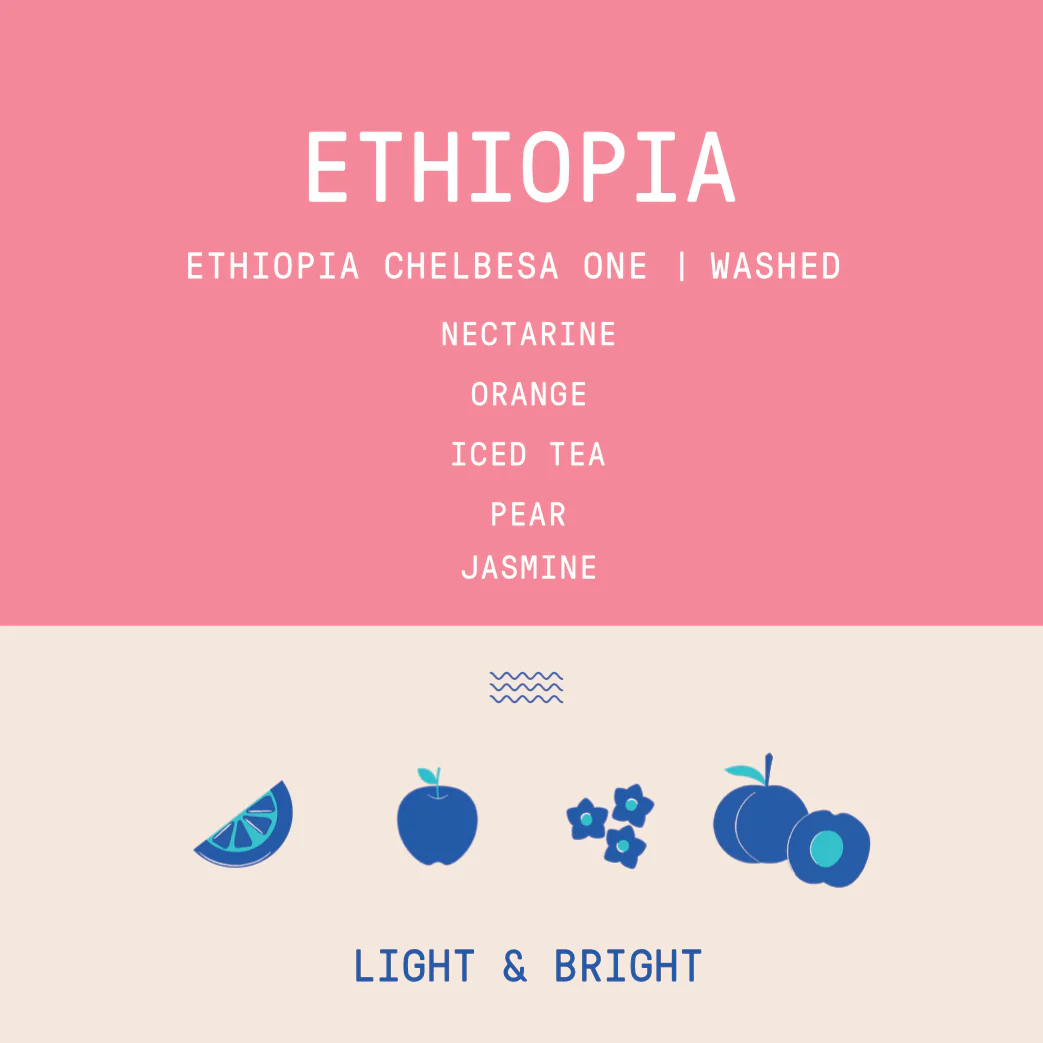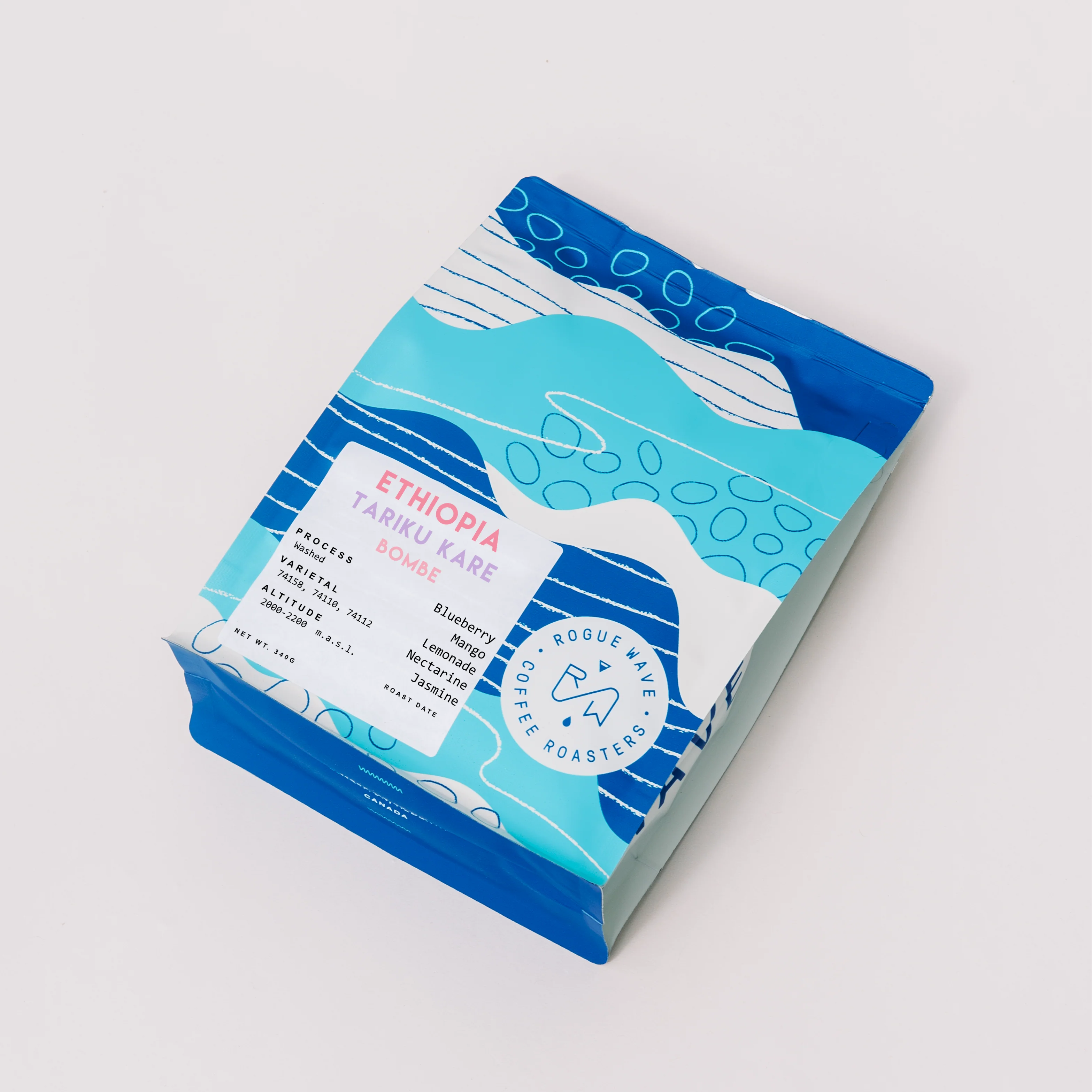
Ethiopia - Tariku Kare Bombe | Washed
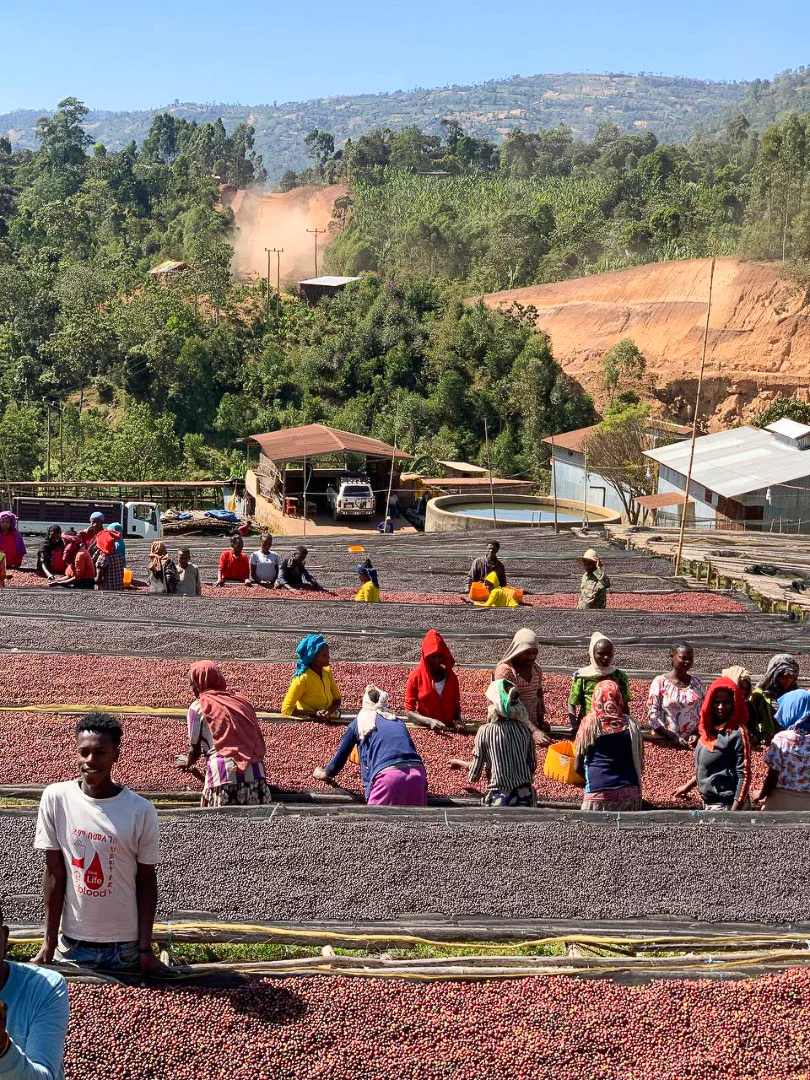
Tariku Kare's path to washing station ownership started at age 15, sorting cherry for a local cooperative in his hometown of Bombe. He worked his way up through the ranks, washing coffee in the channels, then managing a station opened by an outside investor in Nensebo. When that owner went bankrupt, Tariku and 17 colleagues formed a company and opened a new washing station together. He eventually opened a mill in Arsi to supply the international market, and once that operation was stable, returned to Bombe to build another station. At each of his sites, Tariku pays a premium over local prices for ripe red cherry and works hard to incentivize farmers to deliver cherry to his washing stations each year.
The Bombe station sits in Nensebo woreda in the SNNPR (Southern Nations, Nationalities and Peoples) region, drawing cherry from 500 registered smallholder outgrowers across elevations of 2000–2200 masl. Nensebo is a newer coffee-growing area with an average farm size of two hectares, planted with a mix of local varieties (primarily 74158, 74110, and 74112) alongside wild varietals from the neighbouring forests.
Brew recommendations:
- Rest: 3+ weeks
- Espresso: 1:2.5–2.7 | 26–30s
- Filter: 1:16–17 | 94°C
Original: $2.94
-65%$2.94
$1.03More Images
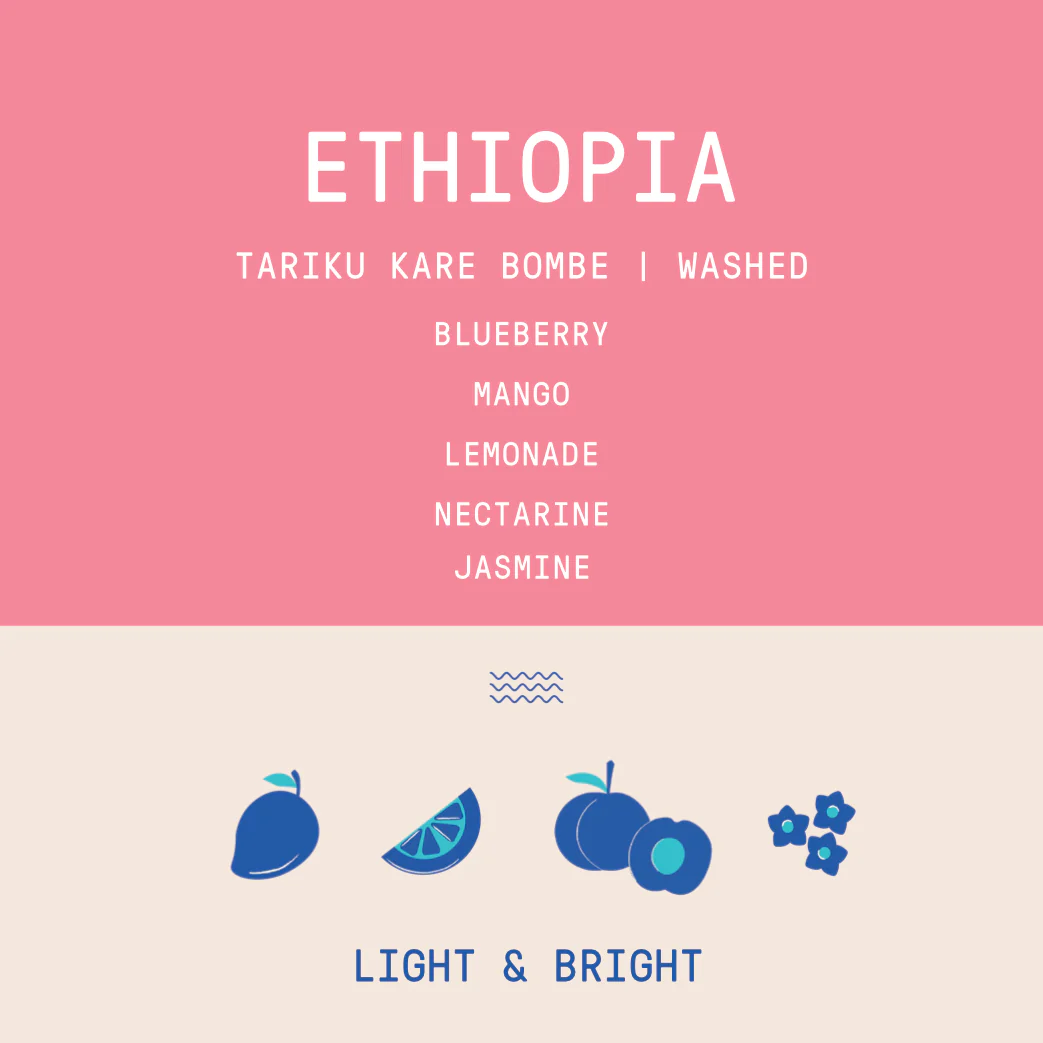

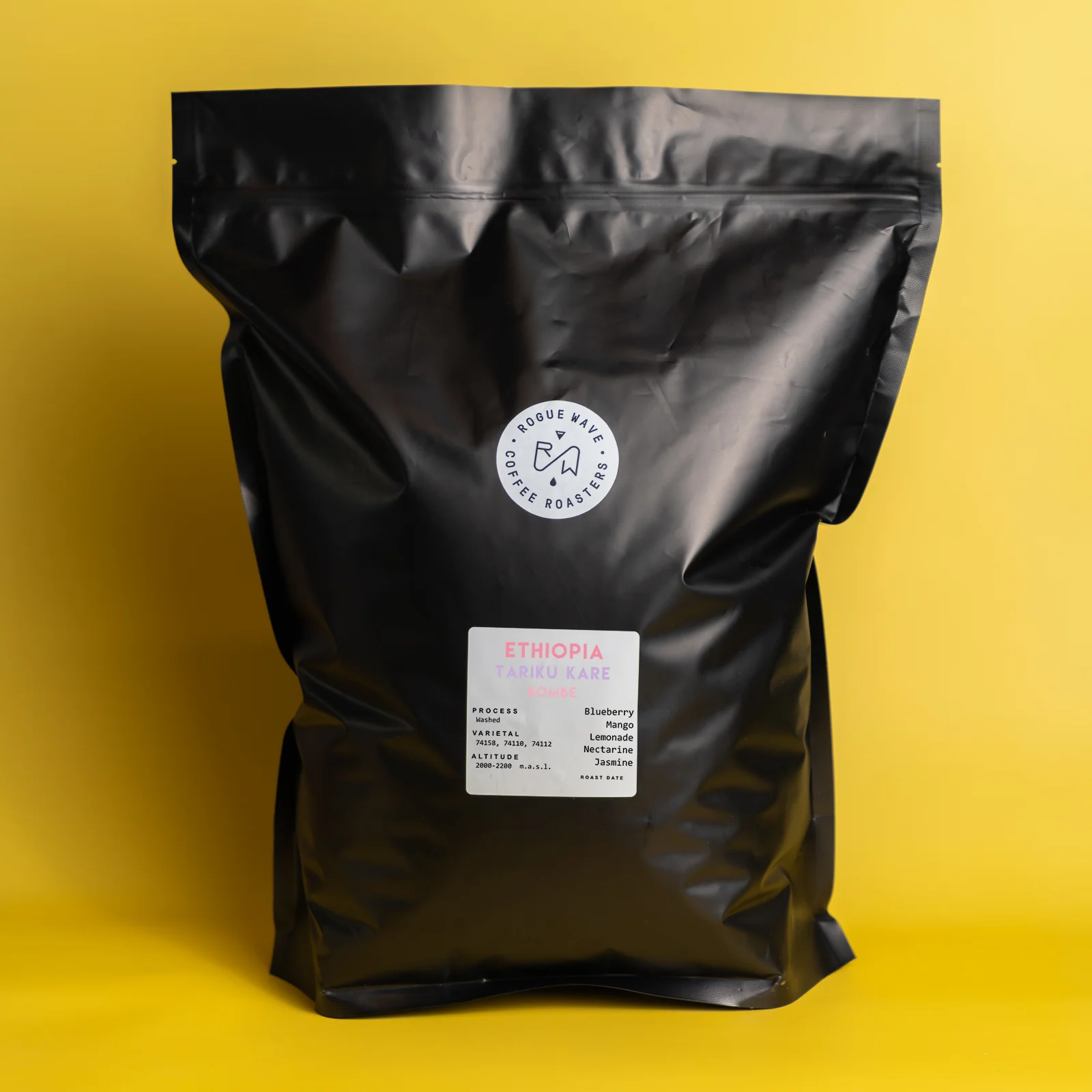
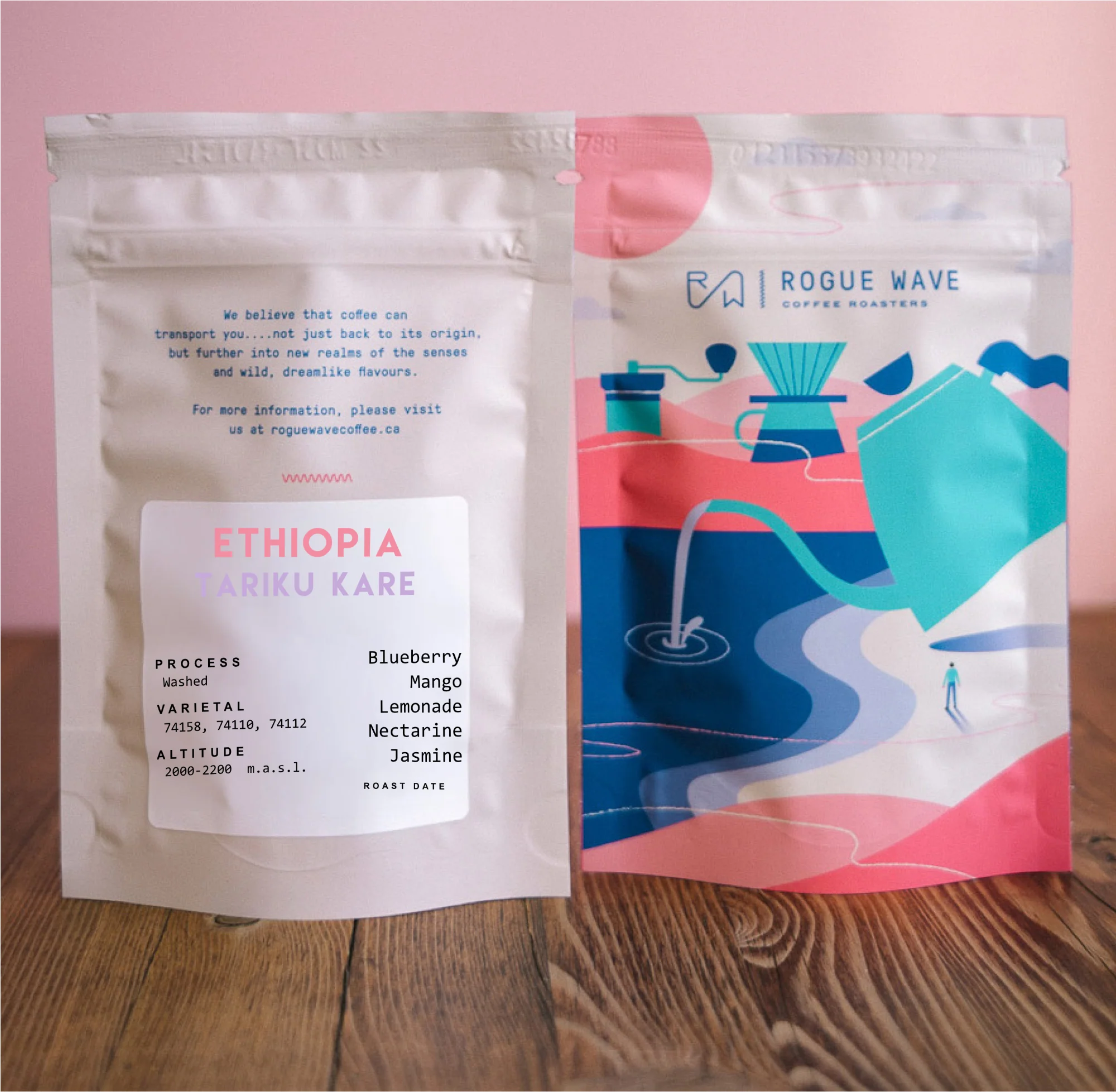
Ethiopia - Tariku Kare Bombe | Washed
Tariku Kare's path to washing station ownership started at age 15, sorting cherry for a local cooperative in his hometown of Bombe. He worked his way up through the ranks, washing coffee in the channels, then managing a station opened by an outside investor in Nensebo. When that owner went bankrupt, Tariku and 17 colleagues formed a company and opened a new washing station together. He eventually opened a mill in Arsi to supply the international market, and once that operation was stable, returned to Bombe to build another station. At each of his sites, Tariku pays a premium over local prices for ripe red cherry and works hard to incentivize farmers to deliver cherry to his washing stations each year.
The Bombe station sits in Nensebo woreda in the SNNPR (Southern Nations, Nationalities and Peoples) region, drawing cherry from 500 registered smallholder outgrowers across elevations of 2000–2200 masl. Nensebo is a newer coffee-growing area with an average farm size of two hectares, planted with a mix of local varieties (primarily 74158, 74110, and 74112) alongside wild varietals from the neighbouring forests.
Brew recommendations:
- Rest: 3+ weeks
- Espresso: 1:2.5–2.7 | 26–30s
- Filter: 1:16–17 | 94°C
Product Information
Product Information
Shipping & Returns
Shipping & Returns
Description
Tariku Kare's path to washing station ownership started at age 15, sorting cherry for a local cooperative in his hometown of Bombe. He worked his way up through the ranks, washing coffee in the channels, then managing a station opened by an outside investor in Nensebo. When that owner went bankrupt, Tariku and 17 colleagues formed a company and opened a new washing station together. He eventually opened a mill in Arsi to supply the international market, and once that operation was stable, returned to Bombe to build another station. At each of his sites, Tariku pays a premium over local prices for ripe red cherry and works hard to incentivize farmers to deliver cherry to his washing stations each year.
The Bombe station sits in Nensebo woreda in the SNNPR (Southern Nations, Nationalities and Peoples) region, drawing cherry from 500 registered smallholder outgrowers across elevations of 2000–2200 masl. Nensebo is a newer coffee-growing area with an average farm size of two hectares, planted with a mix of local varieties (primarily 74158, 74110, and 74112) alongside wild varietals from the neighbouring forests.
Brew recommendations:
- Rest: 3+ weeks
- Espresso: 1:2.5–2.7 | 26–30s
- Filter: 1:16–17 | 94°C