Colombia - Las Marias Salpicon Geisha | 96 hour Anaerobic Natural - 100g 2026
This Geisha comes from Las Marias Estate, a young farm with deep roots. It's the newest farm of the Giraldo family, tucked into the quiet mountain town of Pijao, Quindío in the heart of the Colombian Andes. When José Giraldo found this land, it had been abandoned for 20 years, overtaken by grass and invasive plants. But hidden in that overgrowth were 7,000 trees of 70-year-old Typica, still standing.
The Giraldo family recovered those trees, carefully selected the best genetics they wanted to grow on the farm, and planted the varietal they'd been working toward all along: Geisha, grown from seeds sourced directly out of Panama. Geisha is as demanding to grow as it is rewarding to drink. These trees are fragile, particular, and worth every bit of the attention they require.
For the Salpicón lot, only the finest Geisha cherries were selected — picked at peak ripeness when the brix grade exceeded 22 — then transported to the Café 1959 facilities at La Clarita Drying Station. There, they were sealed in tanks and fermented for 96 hours using the natural CO2 produced by the fermentation itself, before undergoing a slow, 40-day drying process.
Brewing recommendations:
- Rest 2–3 weeks before brewing
- Filter: 1:15–16 ratio | 91°C
- Espresso: 1:2.7 ratio | 88°C | 32 seconds
Original: $14.68
-65%$14.68
$5.14More Images
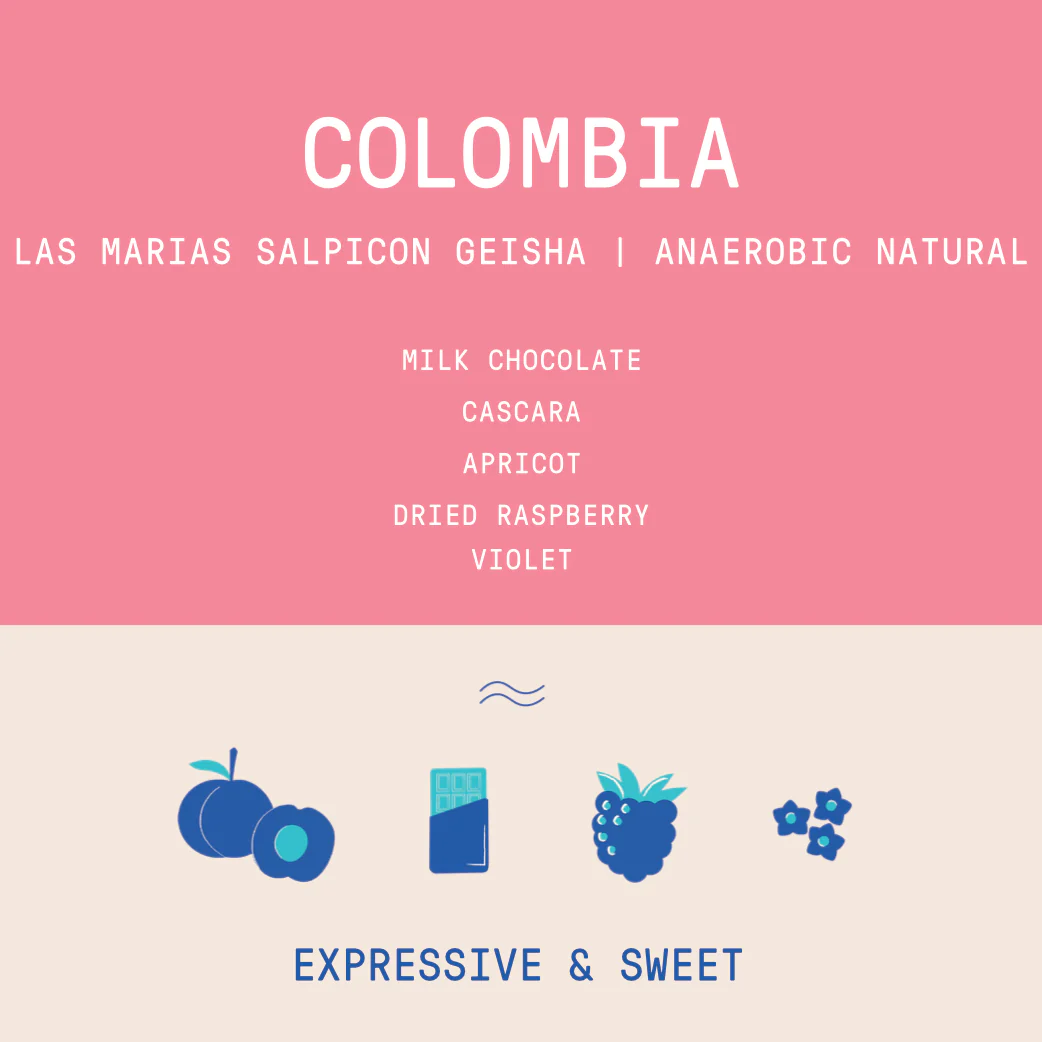
Colombia - Las Marias Salpicon Geisha | 96 hour Anaerobic Natural - 100g 2026
This Geisha comes from Las Marias Estate, a young farm with deep roots. It's the newest farm of the Giraldo family, tucked into the quiet mountain town of Pijao, Quindío in the heart of the Colombian Andes. When José Giraldo found this land, it had been abandoned for 20 years, overtaken by grass and invasive plants. But hidden in that overgrowth were 7,000 trees of 70-year-old Typica, still standing.
The Giraldo family recovered those trees, carefully selected the best genetics they wanted to grow on the farm, and planted the varietal they'd been working toward all along: Geisha, grown from seeds sourced directly out of Panama. Geisha is as demanding to grow as it is rewarding to drink. These trees are fragile, particular, and worth every bit of the attention they require.
For the Salpicón lot, only the finest Geisha cherries were selected — picked at peak ripeness when the brix grade exceeded 22 — then transported to the Café 1959 facilities at La Clarita Drying Station. There, they were sealed in tanks and fermented for 96 hours using the natural CO2 produced by the fermentation itself, before undergoing a slow, 40-day drying process.
Brewing recommendations:
- Rest 2–3 weeks before brewing
- Filter: 1:15–16 ratio | 91°C
- Espresso: 1:2.7 ratio | 88°C | 32 seconds
Product Information
Product Information
Shipping & Returns
Shipping & Returns
Description
This Geisha comes from Las Marias Estate, a young farm with deep roots. It's the newest farm of the Giraldo family, tucked into the quiet mountain town of Pijao, Quindío in the heart of the Colombian Andes. When José Giraldo found this land, it had been abandoned for 20 years, overtaken by grass and invasive plants. But hidden in that overgrowth were 7,000 trees of 70-year-old Typica, still standing.
The Giraldo family recovered those trees, carefully selected the best genetics they wanted to grow on the farm, and planted the varietal they'd been working toward all along: Geisha, grown from seeds sourced directly out of Panama. Geisha is as demanding to grow as it is rewarding to drink. These trees are fragile, particular, and worth every bit of the attention they require.
For the Salpicón lot, only the finest Geisha cherries were selected — picked at peak ripeness when the brix grade exceeded 22 — then transported to the Café 1959 facilities at La Clarita Drying Station. There, they were sealed in tanks and fermented for 96 hours using the natural CO2 produced by the fermentation itself, before undergoing a slow, 40-day drying process.
Brewing recommendations:
- Rest 2–3 weeks before brewing
- Filter: 1:15–16 ratio | 91°C
- Espresso: 1:2.7 ratio | 88°C | 32 seconds